Working from home has plenty of perks, yet keeping a compact workspace tidy can feel like an endless battle. When your desk is crowded with tangled cables, loose notebooks, and everyday clutter, it becomes much harder to stay focused and creative.
The good news is that you do not need a massive room—or an expensive renovation—to create a functional, calming work environment. With a few intentional habits and smart layout tweaks, even the tiniest corner can feel spacious and inspiring.
Here are five simple, practical ways to organize a small home office space.
—
## 1. Go Vertical with Wall-Mounted Storage
When floor and desk space are limited, look up. Utilizing vertical wall space is one of the easiest ways to clear surface clutter without adding bulky furniture to your room.
* **Floating Shelves:** Install one or two sleek floating shelves above your desk to store reference books, storage boxes, or a small trailing plant.
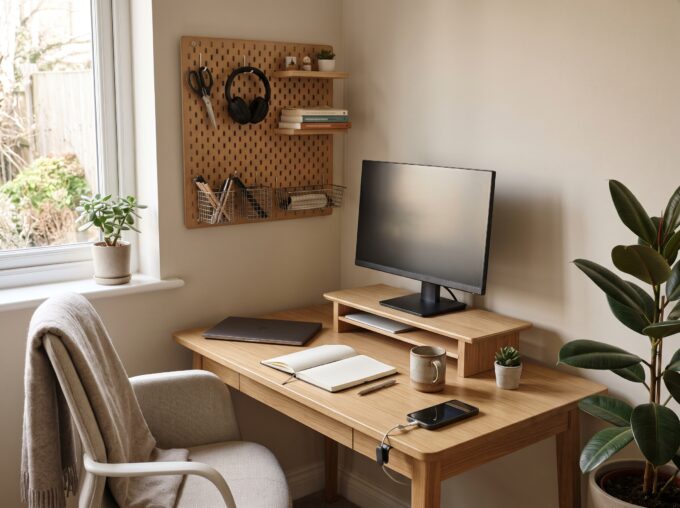
* **Pegboards or Wall Grids:** A minimalist pegboard lets you hang headphones, scissors, small baskets, and daily reminders right within arm’s reach while keeping your desktop completely clear.
* **Wall-Mounted File Organizers:** Keep incoming mail, bills, and active project folders off your desk by sorting them vertically on the wall.
—
## 2. Tame Cable Clutter Once and for All
Nothing makes a small desk feel chaotic faster than a web of charging cords and power strips. Taking 15 minutes to manage your cables instantly upgrades the look and feel of your entire workspace.
* **Under-Desk Cable Trays:** Attach a simple wire or fabric tray underneath your tabletop to hold your power strip and excess cord length out of sight.
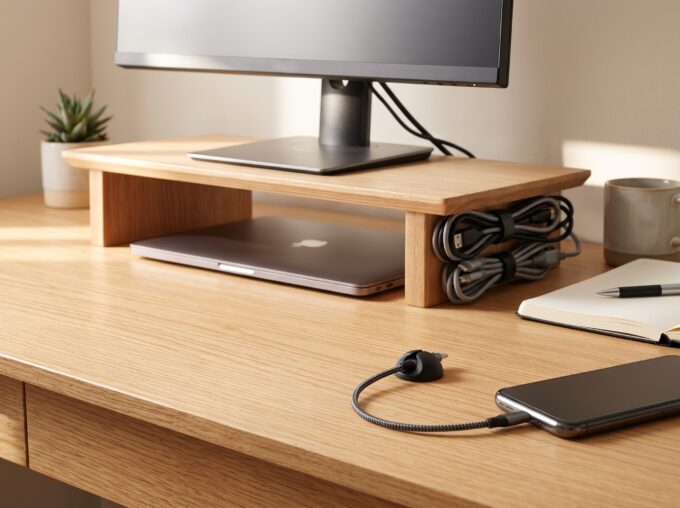
* **Velcro Cable Ties:** Bundle cords that run together (such as your monitor and laptop charger) using reusable fabric ties instead of plastic zip ties.
* **Desktop Cable Clips:** Stick adhesive silicone clips along the back edge of your desk so your phone charger stays put and never slips onto the floor.
—
## 3. Adopt the “One-Touch” Paper Rule
Paper piles are the number one enemy of a small workspace. Bills, sticky notes, receipts, and printed documents accumulate silently until half your desk disappears.
* **Go Digital Where Possible:** Switch bank statements and utility bills to paperless delivery, and use a simple notes app for quick daily to-do lists instead of dozens of sticky notes.
* **Create a Single Inbox Tray:** Keep one slim letter tray on your desk for physical papers that genuinely require action. Once a week, process everything inside—file it, scan it, or recycle it.
—
## 4. Elevate Your Monitor to Free Up Surface Area
A standard monitor stand takes up valuable real estate right in the center of your desk. Lifting your screen not only improves your posture and reduces neck strain, but it also unlocks hidden storage space underneath.
* **Use a Monitor Riser:** A simple wooden or acrylic monitor stand creates an instant cubby underneath where you can slide your keyboard, notebook, or slim storage drawer when the workday ends.
* **Try a Clamp-On Monitor Arm:** If your desk is especially shallow, a desk-mounted monitor arm holds your screen in mid-air and frees up 100% of the surface beneath it.
—
## 5. End Every Workday with a 3-Minute Reset
Organization is much easier to maintain when it becomes a tiny daily habit rather than a massive weekend chore. Before shutting down your computer for the day, spend just three minutes resetting your space:
1. Throw away any trash, snack wrappers, or used tissues.
2. Return mugs and water glasses to the kitchen.
3. Put pens back in their holder and stack your notebook neatly.
4. Wipe down your desk surface so it feels fresh for tomorrow morning.
Waking up to a clean, orderly workspace sets a calm, productive tone before you even open your laptop.
—
### Final Thoughts
Organizing a small home office does not require buying dozens of matching bins or overhauling your entire room overnight. Start with just one area—whether that is hiding tangled cords or clearing off a stack of old papers—and build from there. A calmer, more organized workspace is only a few small changes away.